


The financial world is changing rapidly, and one of the most pressing shifts we are witnessing today is the move towards API-first core banking modernization. This approach, which leverages APIs (Application Programming Interfaces), is not just a trend but a necessity to revolutionize traditional banking systems. API-first core banking modernization is crucial for banks to stay ahead in a rapidly evolving market by enhancing interoperability, agility, and customer-centric services. This article will explore its many advantages. We will examine how it effectively tackles the challenges of legacy systems and why it is not only the future but also a beacon of hope for the financial industry.
The Challenges of Legacy Banking Systems
For decades, traditional core banking systems have been built on monolithic infrastructure, often characterized by complex, rigid, and outdated technologies. While these systems have served the industry for a long time, they are now a bottleneck to innovation. Banks using legacy systems face several challenges, including:
These challenges not only hinder the growth of financial institutions but also pose significant risks in a digital-first world. The API-first approach provides a much-needed solution to overcome these limitations.
Understanding API-First Core Banking
 API-first core banking refers to the practice of designing core banking systems with APIs as the primary means of communication and integration. In simpler terms, it means that instead of building a banking system and then figuring out how to connect it to other systems later, an API-first bank starts by designing the system’s interfaces (APIs) first. This approach enables seamless integration with third-party applications, facilitates easy scalability, and accelerates time-to-market for new features and services.
The key benefits of an API-first core banking system include:
How API-First Core Banking Facilitates Digital Transformation
Digital transformation in banking is no longer a choice – it’s a necessity. API-first core banking accelerates this transformation by enabling:
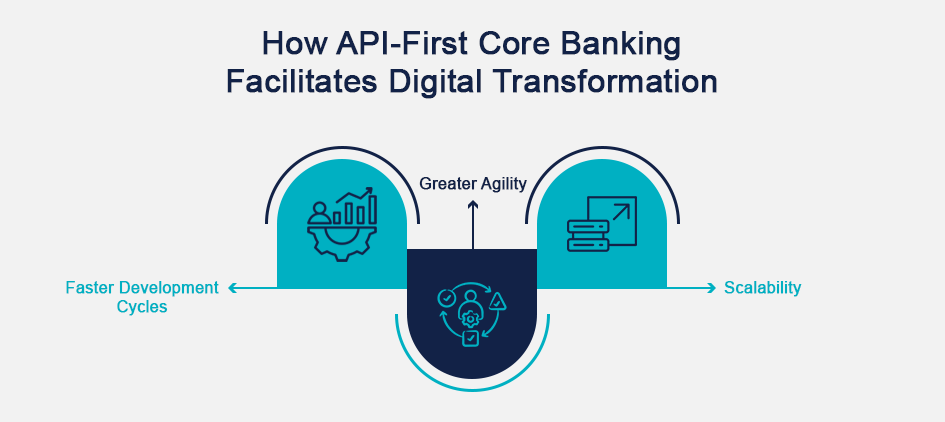
By enabling these capabilities, API-first core banking paves the way for banks to become more agile and responsive in the digital age.
API-First Core Banking and Open Banking
 API-first core banking is at the heart of open banking, enabling third-party access to bank data through APIs and driving innovation in the financial services sector. This shift is transforming the way banks interact with their customers and partners, fostering a more collaborative ecosystem.
Key benefits of APIs in open banking include:
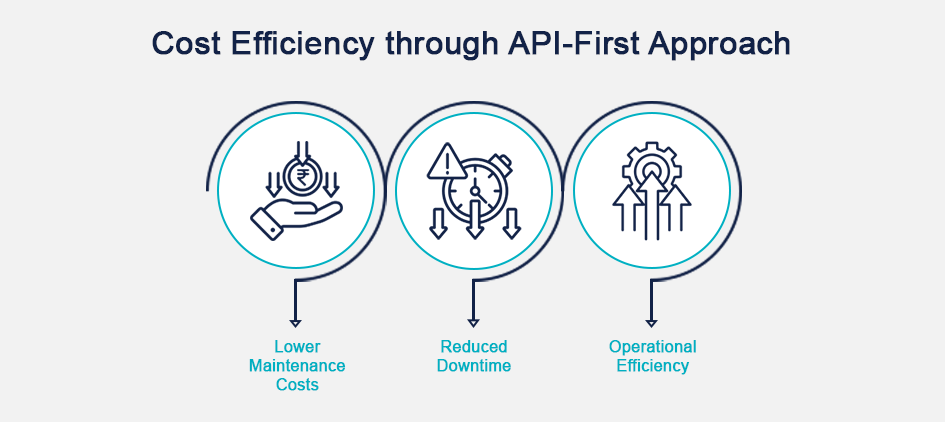
Cost Efficiency through API-First Approach
One of the most significant advantages of API-first core banking is its ability to reduce costs. Here’s how:
Security in API-First Core Banking
The growing reliance on APIs has made security a top priority. To ensure the security of API integrations, banks must implement strong measures to protect their systems and data.
 The Role of APIs in Enhancing Data Accessibility
One of the most potent aspects of APIs is their ability to enhance data accessibility and interoperability. With API-first core banking, banks can:
 Regulatory Compliance and APIs
Compliance is crucial in the highly regulated financial industry. APIs help banks stay compliant by:
 The Future of Core Banking with API-First Approach
The future of core banking is undoubtedly API-first. As the financial industry continues to embrace digital transformation, the adoption of API-first core banking systems is expected to increase. Emerging trends include:
 Challenges in Implementing API-First Core Banking
While the benefits of API-first banking are clear, there are challenges to implementing this model. These include:
Case Studies: Banks Already Adopting API-First Core Banking
Several banks have already embraced the API-first approach. Case studies include:
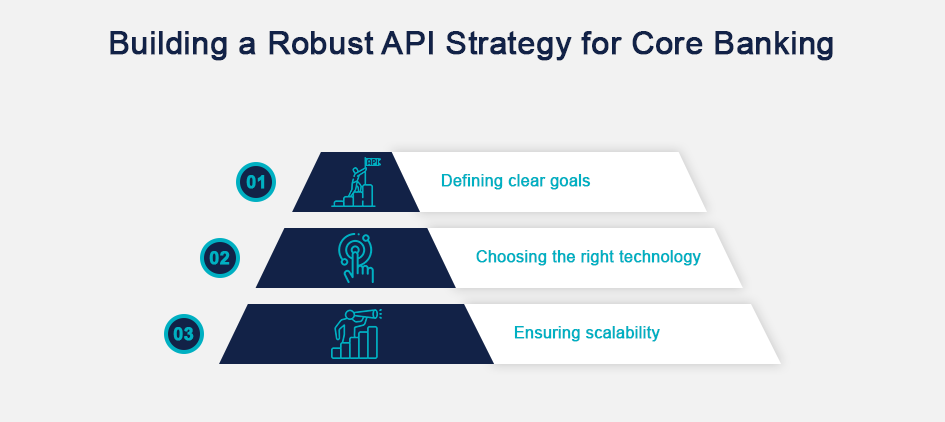
Building a Robust API Strategy for Core Banking
To successfully implement an API-first core banking system, banks must develop a robust API strategy. This includes:
The Role of Third-Party Vendors in API-First Core Banking
Third-party vendors play a crucial role in API-first banking. Collaborating with fintech companies and choosing the right API providers can help banks:
Conclusion
API-first core banking modernization is reshaping the future of banking. By adopting this approach, banks can overcome the limitations of legacy systems, improve customer experiences, and accelerate digital transformation. As more banks adopt API-first models, the financial industry will become increasingly interconnected, agile, and innovative. The time to adopt API-first core banking is now, and the future of banking is API-powered.
FAQs
How Can Datavision help?
We assist various financial institutions and global banks on their digital transformation journey. Our one-of-a-kind approach, which combines people, process, and technology, expedites the delivery of superior results to our clients and drives excellence. Several reputed companies leverage our proprietary suite of business excellence tools and services to unlock new growth levers and unparalleled ROI.
Datavision stands proudly as a prominent banking software solutions provider, recognized for our unwavering commitment to excellence in the industry. We have earned our esteemed reputation by consistently delivering cutting-edge core banking software, catering to the needs of both retail and corporate banking software sectors. At Datavision, our mission is clear: to provide our clients with the best banking software products, ensuring that they stay ahead in an ever-evolving financial landscape. We take pride in serving our prestigious clients and look forward to continuing our journey of innovation and excellence.
Our portfolio of banking software product and services include:
Core Banking Solutions: | FinNext Core | Banking: | FinTrade | EasyLoan | MicroFin |
Digital Banking Solutions: | IBanc | MobiBanc | MBranch | FinTab | FinSight |
Risk & Compliance: |FinTrust |
Want to know how our team of experts at Datavision provides customizable, scalable, and cost-effective banking software products and solutions to our esteemed clients? Visit us for more information.
 The Case for API-First Core Banking Modernization
July 31, 2025
 Data Governance and Compliance in the Age of AI
July 26, 2025
 From Legacy to Cloud-Native: Challenges in Core System Migration
July 2, 2025
 Small Language Models (SLMs) for Efficient Banking Solutions
June 18, 2025
 Hyper-Personalisation through Advanced Data Analytics
June 8, 2025
 The Rise of Agentic AI in Financial Decision-Making
May 23, 2025
 Why Continuous Testing is Critical in Financial Software Development
April 30, 2025
 The “ENGINE” Framework: Transforming Developers into Engineers
April 11, 2025
 Ensuring Compliance in Financial Software Development
March 31, 2025
 The Role of Microservices in Modernizing Core Banking Systems
March 19, 2025